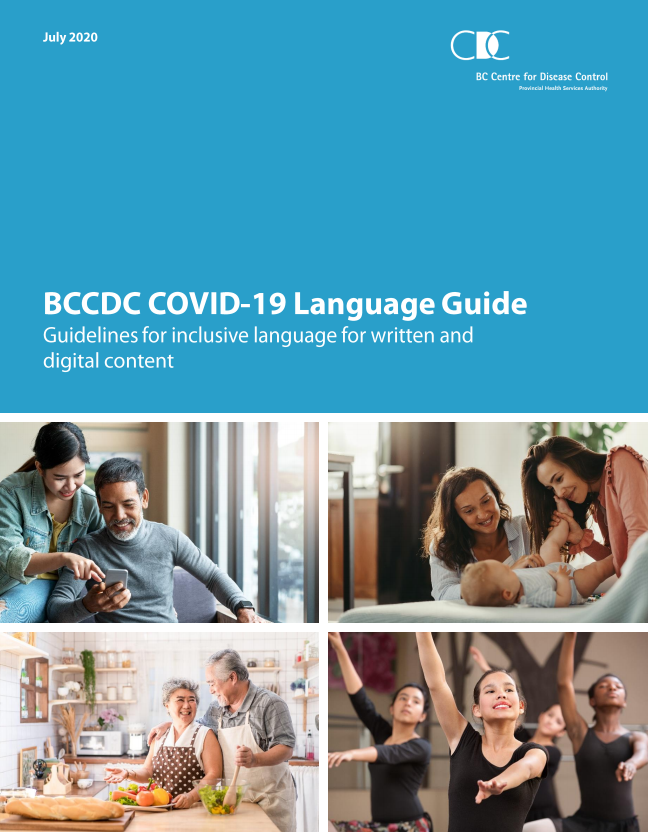
 The new tool guides written and digital content about COVID-19 and our lives during the pandemic.
Source: New language guide helps to destigmatize COVID-19
I was surprised by this guide. The press and guide title made me think it would be language used around COVID exclusively, but it is (quietly) an exhaustive 38 page list of words that should not be said or written. Wow!
This concept of overt (within a community) language reconstruction was new to me in 2018 when I attended Urban Ethnographic Language School in Vancouver’s DTES. During the summer, my word choices were frequently corrected by mentors and community members, each time with an explanation why it was better to say it a different way. This became such a recurring theme, that it shaped the ethnography I produced, and the way I think and speak about urban centre street involvement.
The BCCDC Language guide reflects the language shaping practices I witnessed in the DTES. The list is missing a few new terms I learned in 2018 which makes me wonder if they have changed again. Further, the guide lacks an explanation of who made these language use decisions, how the words were selected, and why. All together, this is an excellent read, and a great jump-off point to a sociolinguistic research project.
 As it celebrates its 45th year in the midst of the COVID-19 pandemic, MOSAIC CEO Olga Stachova says the organization’s focus has remained the same: to offer people the tools they need to succeed and to champion the skills they bring with them.




 karinwiebe